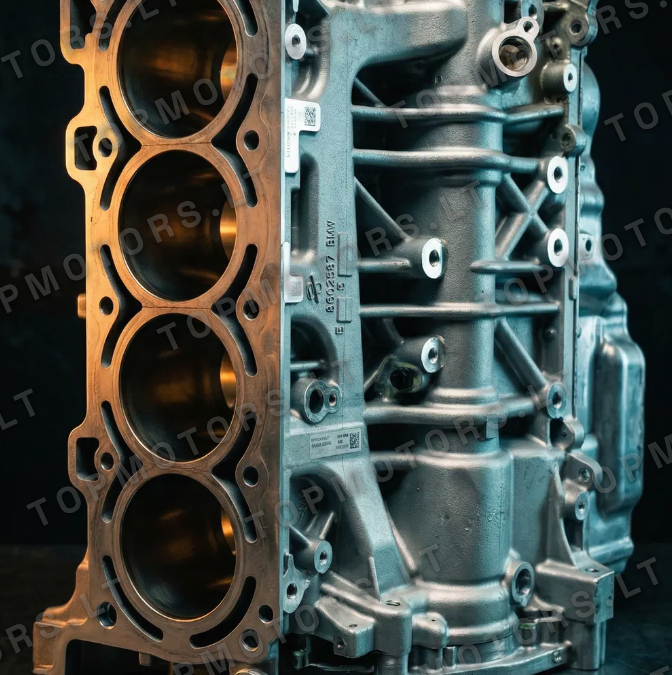
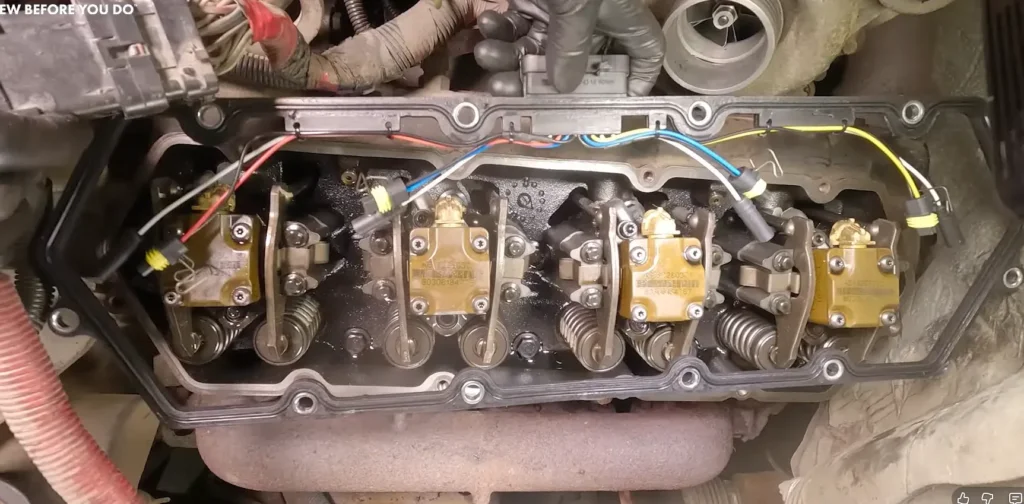
The engine in your truck or heavy-duty machine works under extreme conditions. It creates massive amounts of heat, vibration, and internal pressure. At the very top of the engine block is a strong metal or plastic lid called the valve cover. The valve cover gasket sits directly between this cover and the main engine cylinder head.
Its job is simple but absolutely critical: it seals the top of the engine to keep the engine oil safely inside and keep dirt, dust, and moisture safely outside.
Inside the valve cover, mechanical parts like camshafts and valves move at very high speeds. To prevent these metal parts from destroying each other through friction, the engine oil pump constantly sprays oil over them. The valve cover gasket acts as a strong, flexible wall, trapping this high-pressure oil spray. If this seal fails, you will have a leaking gasket.
Many drivers and fleet managers think a small oil leak is a minor problem. This is a dangerous and expensive mistake. A leaking engine loses its ability to lubricate internal parts correctly. Furthermore, leaking oil can destroy other expensive engine parts located on the outside of the engine, such as rubber belts, cooling hoses, and sensitive electrical sensors. Fixing a leak early saves you thousands of dollars in major repair costs and prevents unexpected vehicle downtime.
Table of Contents
Main Causes of Valve Cover Gasket Failure
Why do these essential seals break down? Modern gaskets are made from strong materials, but they still face a very harsh working environment. Understanding why they fail can help you maintain your heavy-duty engine better. Over time, three main factors cause a gasket to lose its sealing ability:
1. Extreme Thermal Cycling
Every time you start your engine, the temperature rises from the cold outside air to hundreds of degrees. When you turn the engine off, it cools down again. This continuous process is called thermal cycling. Over thousands of miles or working hours, this constant expanding and contracting changes the chemical structure of the gasket. Standard rubber will slowly lose its flexibility. It becomes hard, brittle, and flat like a piece of hard plastic. Once the rubber is hard, it cannot fill the tiny gaps between the metal parts, and hot oil begins to escape.
2. Standard Rubber Aging and Chemical Attack.
Even if an engine is not running, rubber materials age naturally. However, engine oil is a complex mixture of chemicals. As engine oil gets old and dirty, it becomes slightly acidic. This dirty oil constantly attacks the inner edge of the gasket. Over several years, the gasket material will begin to crack and break apart.
3. Engine Vibration and Loose Bolts.
The valve cover is held down by a series of steel bolts. Heavy-duty diesel engines, like Cummins or Komatsu, vibrate intensely during operation. Over time, these heavy vibrations can slowly loosen the bolts. When the bolts are loose, there is not enough clamping force pushing the metal cover against the rubber gasket. On the other hand, if a mechanic tightens the bolts too much during a previous repair, they can crush and destroy the rubber gasket. This is why using the correct factory torque settings is extremely important for a long-lasting seal.
The Engineering Reality:
According to the Engine Rebuilding Standards Manual, “80% of head and valve cover gasket installation success depends on following the correct torque sequence and specifications.” Over-tightening crushes the elastomer material, while under-tightening allows vibration to compromise the seal.
What the Industry Experts Say
“In the world of heavy-duty logistics, a weeping valve cover gasket is often dismissed as a ‘cosmetic’ issue—until it isn’t. I’ve spent decades in the bays, and I can tell you that an oily engine is an unhappy engine. That minor leak isn’t just making a mess; it’s attracting road grime that turns into abrasive sludge, which can damage your sensors and significantly increase fire risks. For fleet managers, the math is simple: it is much cheaper to perform a proactive replacement during scheduled maintenance than to pull a truck off the road because of a fouled alternator or a failed inspection. A clean engine isn’t about vanity; it’s about visibility and professional reliability. If you see the signs, don’t wait for a puddle—swap the seal and keep the profit-making wheels turning.”
- Senior Fleet Maintenance Consultant
- James “Mac” Macpherson
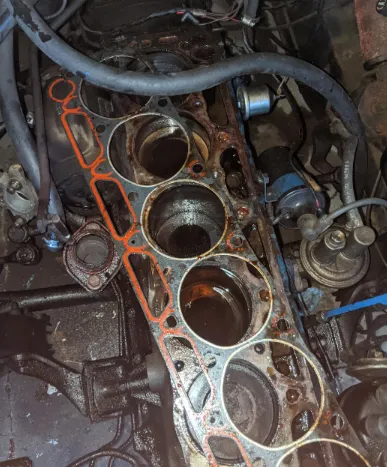
4 Warning Symptoms of a Leaking Valve Cover Gasket
⚠️ Safety Warning
Never attempt to inspect or run your hands along the valve cover seam while a heavy-duty diesel engine is running or immediately after shutdown. The proximity to the high-temperature exhaust manifold presents a severe burn hazard, and pressurized oil spray can cause serious injury.
You do not need to be a professional mechanic to spot a failing seal. Your vehicle will usually give you clear warning signs. If you know what to look for, you can catch the problem early before it ruins your engine. Here are the 4 most common symptoms of a leaking valve cover gasket:
1. Visible Oil Puddles and Grime on the Engine Block.
The most direct sign is visual. Because the valve cover sits at the highest point of the engine, gravity will pull any leaking oil downward. Open the hood of your truck or machine and use a flashlight to look at the sides of the engine block. You are looking for a wet, dark liquid seeping from the seam where the metal cover meets the main engine head.
However, it often does not look like clean, liquid oil. When oil leaks onto the outside of the engine, it acts like a magnet for road dust, dirt, and debris. Very quickly, this mixture turns into a thick, dark, muddy sludge or grime covering the side of the engine. If the top of your engine is covered in a thick layer of black dirt, you almost certainly have a leak at the top.
2. The Smell of Burning Oil and Visible Smoke.
This is one of the most alarming symptoms for a driver. Right below the valve cover on most heavy-duty engines is the exhaust manifold. The exhaust manifold collects the superheated gases from the engine cylinders. The metal surface of this manifold can reach temperatures hot enough to glow red.
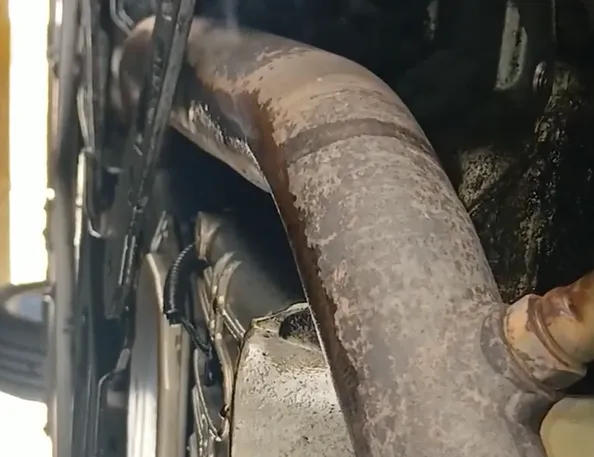
When a gasket fails, drops of oil often fall directly onto this extremely hot exhaust pipe. The oil burns instantly. When this happens, you will notice a very strong, bitter, and sharp burning smell. You will often smell this inside the cabin of the vehicle when you stop at a red light or park the truck. In severe cases, you will actually see light blue or grey smoke rising from under the hood. This is a serious safety hazard and can lead to an engine fire.
3. Low Engine Oil Levels on the Dipstick.
Engines need a specific amount of clean oil to run safely. If your low oil pressure dashboard light turns on, or if you check your dipstick and see the oil level is consistently dropping, the oil is going somewhere.
A slow leak from the valve cover might not always leave a big puddle on the ground, especially if the oil is collecting in the plastic covers under the vehicle or burning off on the exhaust. If you find yourself adding extra oil every few weeks, but your vehicle runs normally otherwise, a leaking gasket is the prime suspect. Driving with low oil increases internal friction, leading to severe metal wear.
4. Engine Misfires, Rough Idling, and Power Loss
This symptom surprises many people, but it is very common. In most engines today, the spark plugs (for gasoline) or fuel injectors (for diesel) are placed directly in the center of the cylinder head. To reach them, they must pass through deep tubes built into the valve cover.
A complete gasket setup uses small, round rubber rings called “tube seals” to seal these holes. If these inner tube seals fail, engine oil will flood into the deep tubes where the spark plugs or injectors sit. Engine oil blocks electricity. When the tube fills with oil, it ruins the electrical connection. This causes the engine to “misfire.” When driving, a misfire feels like the engine is shaking, jerking, or losing power.
Why You Need a Complete Valve Cover Gasket Replacement Kit
When you confirm that your engine is leaking, the next step is to buy the right repair parts. Many people try to save money by purchasing only the large outer rubber seal. This is a major mistake that will lead to double the labor costs later.
To fix the engine correctly, you need a complete valve cover gasket replacement kit. A high-quality kit provides everything required for a permanent, factory-level seal. A proper kit must include:
- The Main Perimeter Gasket: The large rubber seal that goes around the outside edge of the cover.
- Spark Plug / Injector Tube Seals (O-Rings): The small circular seals that stop oil from drowning your electrical parts (as discussed in symptom #4).
- Bolt Grommets: Small rubber washers that go under the mounting bolts. These are crucial. They apply the correct downward pressure on the cover. If you reuse old, hard grommets, the new main gasket will not compress properly, and it will leak again within weeks.
Material Matters: Choose FKM for Heavy-Duty Use. The material of the kit is just as important as the components. Cheap aftermarket kits use standard Nitrile rubber (NBR). NBR cannot survive the extreme heat of modern diesel engines for very long.
For true durability, professionals choose kits made with FKM (Fluoroelastomer) or premium Silicone. FKM is a high-technology synthetic rubber designed specifically for extreme heat and chemical resistance. It stays flexible and maintains its sealing pressure much longer than standard materials.
Stop the Leak and Protect Your Engine Today
Source Professional Gasket Kits Direct from the Manufacturer
Ignoring a small oil leak is a massive financial risk. What starts as weeping oil quickly escalates into electrical fires, destroyed sensors, and catastrophic engine failure. You need components that guarantee a one-time, permanent fix. As a direct manufacturing facility affiliated with Hubei Lianzhong Industrial Co., Ltd. (established 2001), VPGASKET provides undeniable advantages for B2B distributors and large-scale fleets:
- Complete Kit Engineering: We provide the main seal, tube seals, and bolt grommets in one single SKU, eliminating sourcing delays.
- ISO-Certified Quality: Our CNC-molded FKM and Silicone seals are chemically tested to resist acidic, aged diesel oil and survive extreme top-end temperatures.
- Global Export Logistics: By cutting out trading intermediaries, we offer aggressive wholesale pricing with robust packaging designed for international sea freight.
VPGASKET Valve Cover Compatibility & OEM Interchange Guide
Purchasing individual seals is inefficient and risky. We supply pre-packaged, complete BOM (Bill of Materials) valve cover kits mapped precisely to top-tier mid-range and heavy-duty platforms. Here is our cross-reference data for high-demand engines:
| Engine Platform | Typical Application | Compatible Equipment Brands | Complete Kit Replaces OEM No. | Core Material Tech |
| Cummins ISL9 / L9 | Municipal Waste Trucks, Transit Buses | Autocar, New Flyer, Freightliner M2 | 3968437, 4352146 | Steel-Carrier + FKM Elastomer |
| Cummins QSB 6.7 | Agricultural Tractors, Wheel Loaders | Case IH, New Holland, Hyundai | 3954621, 4899226 | High-Temp Silicone Blend |
| Caterpillar C7 / C9 | Medium-Duty Box Trucks, Graders | CAT Heavy Equipment, GMC Topkick | 114-1690, 242-0390 | Proprietary NBR/FKM |
| Navistar DT466 | School Buses, Regional Delivery | International Trucks, IC Bus | 1830606C92 | Reinforced Molded Rubber |
Real-World ROI: Eliminating Alternator Failures in a Municipal Waste Fleet
A major metropolitan sanitation department was operating 80 Autocar refuse trucks powered by Cummins ISL9 engines. Due to the relentless stop-and-go nature of waste collection, the engines were constantly heat-soaking. Their aftermarket valve cover gaskets were hardening rapidly, causing oil to leak directly onto the alternators mounted below. The resulting electrical failures were costing the city thousands of dollars in replacement alternators and crippling their collection routes. The fleet manager overhauled their preventive maintenance schedule, utilizing VPGASKET’s Complete ISL9 Valve Cover Kits. The Benefit: The premium FKM material and integrated bolt grommets completely absorbed the extreme thermal cycling. The fleet eliminated top-end oil leaks entirely, reduced its alternator failure rate by 95%, and reclaimed over $40,000 in the first year from avoided electrical damage and towing fees.
FAQ
Is it safe to drive with a leaking valve cover gasket?
No, it is not safe for long trips. While you can drive a short distance to a repair shop, ignoring the leak is dangerous. Leaking oil can drop onto the hot exhaust and start an engine fire. Also, if the oil level drops too low, your engine will suffer catastrophic internal damage.
How much does a valve cover gasket replacement cost?
The total cost depends heavily on your vehicle type. The gasket kit itself is usually very affordable. However, the labor cost can be high. For simple engines, a mechanic might charge 1 to 2 hours of labor. For heavy-duty V-style engines, it can take 4 to 6 hours. Because labor is so expensive, you must use high-quality parts so you do not have to pay for the repair twice.
How long should a premium valve cover gasket last?
High-quality factory-grade gasket made from FKM or premium silicone should last between 60,000 and 100,000 miles (or equivalent working hours for industrial machines). Regular oil changes help extend the life of the gasket by keeping the oil clean and less acidic.
Can I just use liquid silicone sealant (RTV) instead of a real rubber gasket?
We do not recommend this for heavy-duty engines. While liquid sealant can fix small corners, relying on it for the entire valve cover is risky. It is messy, difficult to apply evenly, and can easily squeeze into the engine and block oil passages. Always use a pre-molded, solid rubber gasket kit for a safe and permanent repair.