The Nightmare of a Potential Engine Overhaul
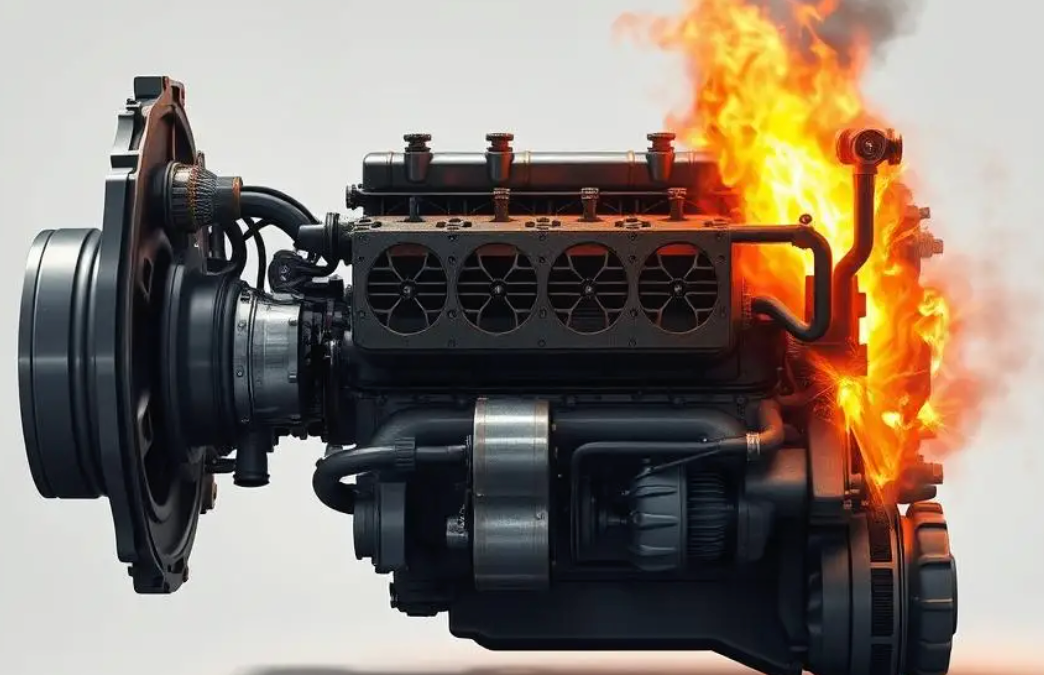
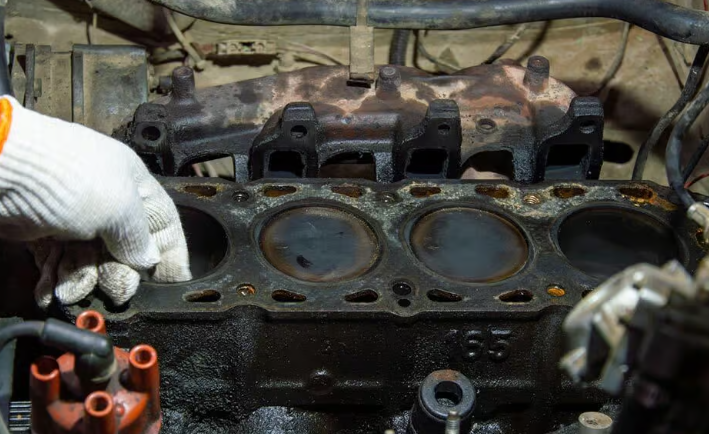
For any vehicle owner or fleet mechanic, the phrase “blown head gasket” is a nightmare. It represents one of the most expensive and time-consuming repairs an engine can undergo. The head gasket is a critical seal that sits between the engine block and the cylinder head. It must manage high-pressure combustion gases, flowing engine oil, and circulating coolant simultaneously. When this seal fails, these three systems begin to mix, leading to rapid engine destruction. To avoid these issues, it’s essential to know how to test for a blown head gasket accurately. In this article, we will cover 4 proven methods on how to test for blown head gasket. Mastering how to test for blown head gasket can save you time and money.
However, many people make the mistake of jumping to conclusions. Because the symptoms of a failed gasket often look like other, cheaper problems—such as a bad water pump or a cracked radiator—blindly disassembling the engine is a massive financial risk. Before you commit to a multi-thousand-dollar repair, you must master how to test for blown head gasket using scientific methods. Accurate diagnosis ensures you are fixing the actual problem, saving you from unnecessary labor costs and vehicle downtime. Learning how to test for blown head gasket can save you time and money.
Table of Contents
Method 1: The Visual Inspection (Exhaust and Oil)
The first step in learning how to test for a blown head gasket is using your eyes and nose. This is the simplest method and requires no special tools, but it requires a careful eye for detail. When a head gasket fails, it often allows coolant to enter the combustion chamber or mix with the engine oil.
Checking for “White Smoke” (Coolant Burning)
When you start the engine, look at the exhaust pipe. It is normal to see a small amount of white vapor on a cold morning. However, if you see thick, sweet-smelling white smoke that continues even after the engine is warm, this is a classic sign. This smoke is actually steam caused by engine coolant leaking into the cylinders and burning. If you notice this, it is a primary indicator of a failed seal.
The “Milky Oil” Test
Next, pull out the engine oil dipstick and look at the color of the oil. Healthy oil is brown or black. If the oil looks like a “chocolate milkshake” or has a milky, frothy texture, it means coolant has mixed with the oil. This occurs when the head gasket barrier between the oil galleries and coolant passages breaks down. If the oil looks milky, do not run the engine, as this mixture will quickly destroy your engine bearings.
Method 2: The Cooling System Pressure Test
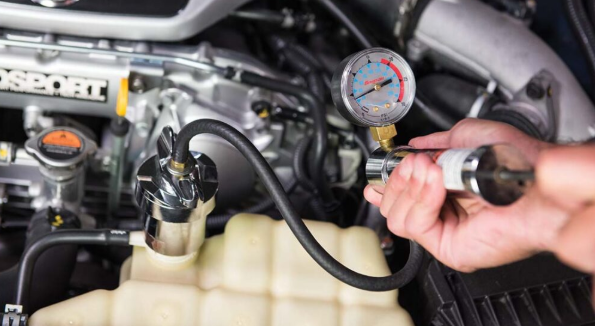
If visual checks are not clear, the next stage of how to test for a blown head gasket involves a cooling system pressure tester. This tool is essentially a hand pump with a pressure gauge that attaches to your radiator or coolant expansion tank.
⚠️ Safety Warning
Never attempt to attach a pressure tester or open the radiator cap on a heavy-duty diesel engine while the system is hot. A compromised head gasket can super-pressurize the cooling jacket. Opening it prematurely can result in a violent release of boiling coolant and severe scalding.
How to Perform the Test
With the engine cool and turned off, you pump the tool to the specific pressure listed on your radiator cap (usually around 15 PSI). A healthy engine should hold this pressure for at least 15 to 20 minutes. If the needle on the gauge begins to drop, it means there is a leak in the system.
Interpreting the Results
If the pressure drops but you see no external puddles of coolant on the ground or the engine block, the coolant is likely leaking internally. This points directly to the cylinder head area. A failing head gasket allows the pressurized coolant to seep into the cylinders or the oil crankcase. This is a very reliable way to confirm an internal leak without taking anything apart.
Method 3: The Cylinder Compression Test
A more “hardcore” approach to how to test for a blown head gasket involves measuring the internal pressure of each cylinder. This test tells you exactly how well the head gasket is sealing the combustion pressure.
Finding the “Dead” Cylinders
To perform this, you remove all spark plugs (or injectors in diesel engines) and thread a compression gauge into one cylinder at a time. You then crank the engine and record the PSI (Pounds per Square Inch) reading.
In a healthy engine, all cylinders should have high pressure, and the readings should be within 10% of each other. However, if you find two cylinders next to each other that both have very low pressure, this is a “smoking gun” for a blown head gasket. It means the gasket has burned through the narrow metal bridge between those two cylinders, allowing pressure to leak back and forth. This is one of the most definitive ways to prove a gasket failure.
Method 4: The Combustion Leak Detector (Block Test)
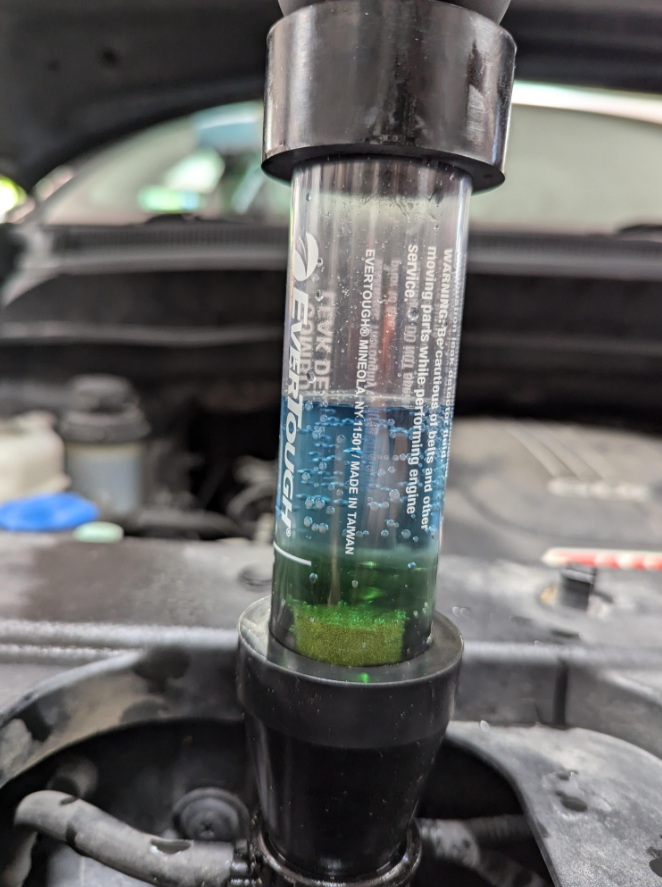
The final and most scientific way to test for a blown head gasket is the chemical “Block Test.” This method looks for invisible combustion gases (CO2) that have leaked into the cooling system.
Confirmed a Leak? VPGASKET Replacement Matrix for Off-Highway Machinery
If your diagnostic tests confirm a blowout, rapid parts procurement is critical. For off-highway machinery, agricultural equipment, and construction fleets, VPGASKET supplies exact-tolerance OEM replacement kits. Here is our cross-reference data for the most heavily utilized industrial engines:
| Engine Platform | Typical Industrial Application | Compatible Equipment Brands | Head Gasket Replaces OEM No. | Gasket Technology |
| Cummins 4BT / 6BT (3.9L/5.9L) | Skid Steers, Backhoes, Tractors | Case IH, Komatsu, JCB | 3283335, 3283333 | Heavy-Duty Composite / MLS |
| Cummins QSB 4.5 / 6.7 | Wheel Loaders, Agricultural Harvesters | Hyundai, Doosan, New Holland | 4932210, 4933225 | Steel Core + Edge Molded FKM |
| Cummins QSL9 / ISL9 | Mid-Range Excavators, Cranes | Sany, XCMG, Terex | 4089889, 4352146 | Advanced Multi-Layer Steel |
| Caterpillar C4.4 / C6.6 | Telehandlers, Compact Track Loaders | CAT Heavy Equipment | 293-2147, 311-5874 | Thermal-Resistant Silicone Coat |
The Chemical Reaction
You use a specialized plastic tool filled with a blue diagnostic fluid. You place this tool on the open radiator neck while the engine is running. The tool draws air from the cooling system through the blue liquid. If there is a leak in the head gasket, combustion gases will enter the coolant and travel to the radiator. When these gases hit the blue liquid, a chemical reaction occurs, and the liquid turns yellow (for gasoline engines) or green (for diesel engines).
If the liquid changes color, it is 100% proof that the head gasket is blown. This test is excellent for finding small, early-stage leaks that do not show up during a compression test. (In our next article, we will go into detail on using this specific test kit.
What the Industry Experts Say
“When customers ask me how to test for a blown head gasket, I always tell them to be patient. I have seen many people spend $2,000 on a head gasket repair only to find out the real problem was a $50 cracked overflow tank. You must use at least two of the methods I mentioned to be sure. My favorite combination is the pressure test followed by the chemical block test. If both of those fail, you know for a fact that the cylinder head needs to come off. In the B2B world, where every hour of downtime costs money, a fast and accurate diagnosis is the difference between a profitable fleet and a bankrupt one.”
- David Miller
- Senior Engine Diagnostic Specialist
Real-World ROI: Eliminating Diagnostic Guesswork for an Equipment Rental Fleet
A major construction equipment rental company with over 150 Cummins QSB-powered excavators was bleeding maintenance budget. Their mechanics were guessing at overheating issues, unnecessarily tearing down healthy engines, or conversely, missing micro-leaks that later caused catastrophic block failures on job sites. *The fleet director implemented a mandatory “Block Test & Pressure Test” diagnostic protocol. Once a blown gasket was scientifically confirmed, they mandated the exclusive use of VPGASKET’s Heavy-Duty MLS Replacement Kits. *
The Engineering Reality: According to the Engine Rebuilding Standards Manual, “80% of head gasket installation success depends on following correct torque sequence and specifications.”
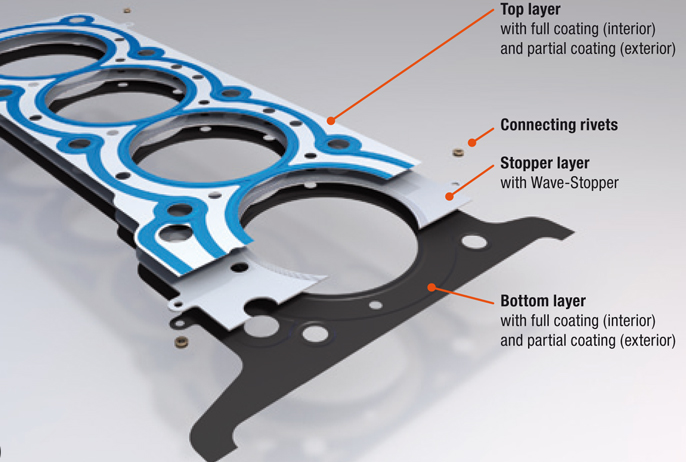
By pairing accurate diagnostics with VPGASKET’s precision-stamped steel gaskets (which withstand immense torque yields without crushing), the rental company reduced its engine comeback rate to zero. Over 12 months, this data-driven diagnostic and procurement strategy saved them over $85,000 in wasted labor and reclaimed equipment rental days.
Conclusion: What to Do If the Test is Positive?
Relying on “sealant in a bottle” is a disastrous choice for commercial machinery. As an ISO 9001-certified direct manufacturer affiliated with Hubei Lianzhong Industrial Co., Ltd. (established 2001), VPGASKET empowers repair shops and B2B distributors with OEM-equivalent solutions. By bypassing trading companies, we provide aggressive wholesale margins and global shipping for the exact ESN-verified gaskets your fleet requires to stay operational.
Don’t let a failed test keep your heavy machinery paralyzed. Contact the VPGASKET commercial sales team today to request a custom wholesale catalog and factory-direct pricing on our premium MLS rebuilding kits.
Ready to rebuild your engine with parts you can trust? Don’t let a failed head gasket keep your machine down. Contact the VPGASKET sales team today to request our full wholesale catalog and get factory-direct pricing on premium MLS gaskets built for professional performance.
FAQ
1. Can a car pass a compression test but still have a blown head gasket?
Yes. A gasket can fail in several ways. It might seal the combustion pressure (passing the compression test), but have a small leak between a coolant passage and an oil gallery. This is why you must know how to test for a blown head gasket using multiple methods, like the visual oil check.
2. How long does it take to perform these tests?
Visual checks take 5 minutes. A cooling system pressure test takes about 20 minutes. A full compression test or chemical block test usually takes 45 to 60 minutes. It is time well spent compared to a 20-hour engine teardown.
3. What is the most common sign of a blown head gasket?
The most common “early” sign is the engine overheating without any visible external leaks. The most common “late” sign is thick white smoke from the exhaust or milky oil.
4. Is a chemical block test effective on diesel engines?
Yes, but it is slightly more difficult because diesel engines produce less CO2 at idle. You may need to safely load the engine or increase the RPM slightly to get an accurate reading when learning how to test for a blown head gasket on a diesel.