In the demanding world of commercial transportation and heavy machinery, heat is a constant enemy. Every time a heavy-duty diesel engine hauls a full load up a steep grade, the internal temperatures soar. While the radiator and coolant work to protect the metal block, the seals are often left to face the heat alone. The high temperature gasket material you choose is the only thing standing between a productive day on the road and a catastrophic engine failure in the middle of nowhere.
For a fleet manager or a professional mechanic, a gasket is not just a cheap piece of rubber; it is a critical engineering component. When an engine runs at peak capacity, standard materials can quickly become brittle, crack, or even melt. This failure leads to oil leaks, loss of compression, and expensive secondary damage to turbochargers and sensors. To protect your business from unnecessary downtime, you must understand the science behind the thermal resistance of engine seals. It is time to look beyond the surface and discover what truly makes a gasket survive the fire.
Table of Contents
The Molecular Battle: Decoding High Temp Gasket Material
Not all sealing materials are built the same way. When you hold two black gaskets in your hand, they may feel identical, but their molecular structures are worlds apart. The most common mistake in B2B parts sourcing is assuming that any “heavy-duty” seal can handle extreme heat. To make a smart investment, you must understand the three primary materials that define the industry.
NBR (Nitrile Rubber): The Economy Choice with a Limit
NBR is a popular choice for many general-purpose seals because it is excellent at resisting oil. However, it is a poor high temp gasket material. NBR has a thermal limit of approximately 120°C (248°F). Once the engine exceeds this temperature, NBR undergoes a chemical change called “carbonization.” It loses its flexibility, turns into a hard plastic-like substance, and cracks under vibration. If your engine works in a high-load environment, NBR is a temporary “band-aid” that will lead to a leak.
Silicone: The Heat Specialist with a Strength Gap
Silicone is well-known for its impressive thermal range, often handling up to 200°C (392°F). It is a flexible high temp gasket material that works well for valve covers and oil pans. However, silicone has a major weakness: physical durability. It has low tear strength and can easily be damaged by high-pressure oil or aggressive chemical additives. While the thermal resistance of engine seals made of silicone is good, they often fail under the mechanical stress of a heavy-duty diesel engine.
FKM (Fluoroelastomer): The Gold Standard for Reliability
FKM, commonly known by the brand name Viton, is the ultimate high temp gasket material. It was developed for the aerospace and military industries to handle the most aggressive environments on Earth. FKM can operate continuously at 250°C (482°F) and survive short spikes of even higher temperatures. Its molecular bond is so strong that it resists heat, synthetic oils, and acidic fuel all at once. For professionals who cannot afford a second repair, FKM is the only logical choice for the thermal resistance of engine seals.
Understanding the Thermal Resistance of Engine Seals
Thermal resistance is not just about a material not melting. In the context of heavy-duty engines, the thermal resistance of engine seals refers to a material’s ability to maintain its “elastic memory.”
When a cylinder head gets hot, it expands. When it cools down, it contracts. The gasket must act like a spring, expanding and contracting with the metal. If the high temp gasket material loses its elasticity due to heat damage, it can no longer fill the gaps between the metal surfaces. This is when “weeping” leaks start.
Furthermore, the thermal resistance of engine seals must be measured against the chemical environment. Modern synthetic oils contain detergents that become very aggressive at high temperatures. A low-quality gasket might survive the heat but dissolve in the oil. This is why material engineering is so critical; the seal must be a multi-functional barrier that remains stable under thermal, chemical, and mechanical pressure.
The Financial Impact of Material Failure
In the B2B world, the price of a part is only 10% of the total cost of a repair. If you save $10 by buying a cheaper high temp gasket material, you are taking a massive financial risk.
Consider the labor involved. To replace a turbocharger gasket or a rear main seal, a mechanic might spend 6 to 10 hours disassembling the engine. At a labor rate of $120 per hour, the labor cost is over $1,000. If your cheap seal fails because it lacked the proper thermal resistance of engine seals, you have to pay that $1,000 labor bill a second time.
For fleet owners, the “Hidden Cost of Downtime” is even higher. Every day a truck sits in the shop, it is not generating revenue. By investing in premium high temp gasket material from the start, you are buying “insurance” against repeat failures. The goal is to maximize the time between overhauls, and that is only possible if every seal in the engine is engineered for the long haul.
Why FKM Material is Mandatory for Modern Diesel Fleets
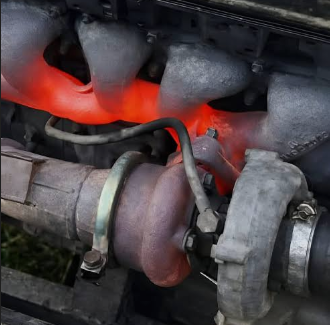
Modern diesel engines run much hotter than engines from 20 years ago. To meet strict emissions standards, engines now use Exhaust Gas Recirculation (EGR) and Variable Geometry Turbochargers (VGT). These systems concentrate heat in specific areas of the engine.
Standard materials simply cannot survive in an EGR cooler or a high-pressure turbo manifold. This is why the thermal resistance of engine seals has become a top priority for OEM manufacturers. When you source a high temp gasket material for your workshop or distribution center, you must look for the “FKM” or “Viton” label.
FKM does not just survive the heat; it thrives in it. It remains flexible even after years of high-load cycles. At VPGASKET, we focus on providing FKM-based solutions for the most critical areas of the engine. We know that in the heavy-duty sector, there is no room for “good enough.” You need parts that are built to outlast the competition.
VPGASKET Advanced Thermal Sealing Solutions
To provide the best thermal resistance of engine seals, we have developed a specialized line of products designed for the “Hot Zones” of the engine. Our factory uses premium raw materials sourced from global leaders in polymer science.
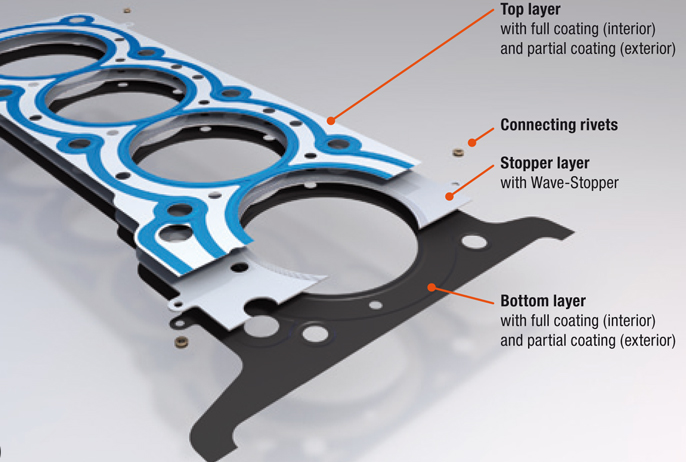
Premium FKM Manifold Gaskets. Our exhaust manifold and turbo gaskets are designed to withstand the extreme 600°C+ temperatures of exhaust gas. We combine high-grade stainless steel with specialized high temp gasket material coatings to ensure a perfect seal that never blows out.
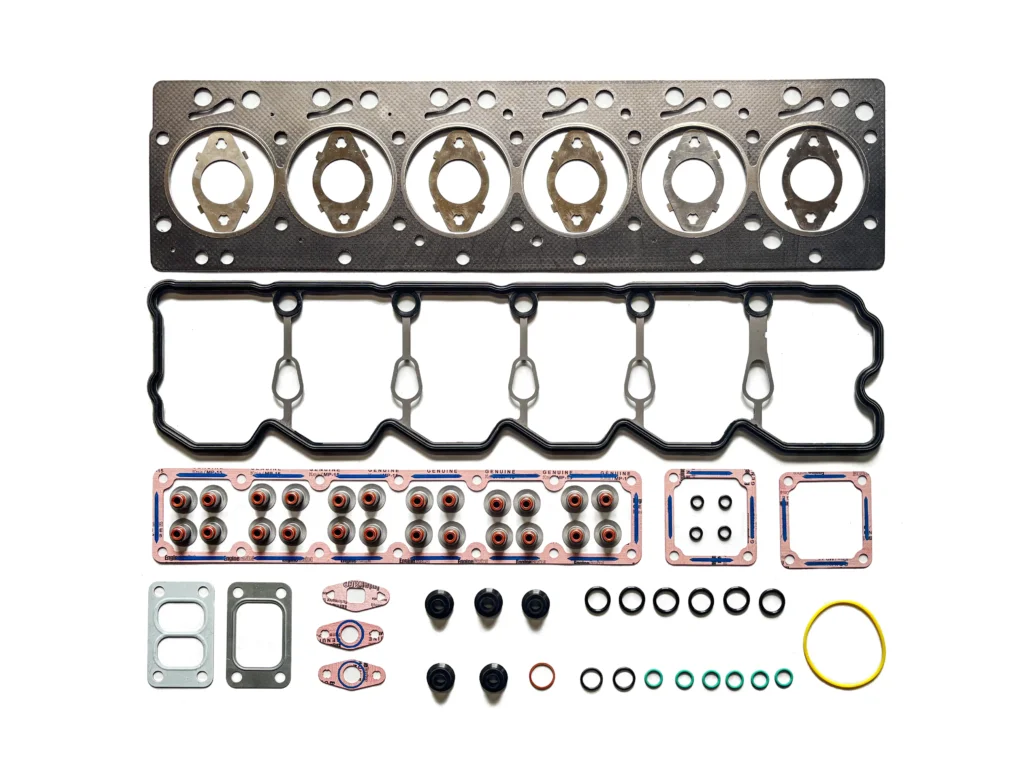
Complete FKM Overhaul Kits For Cummins, Volvo, and Komatsu engines, we offer complete overhaul kits where every critical O-ring and seal is made from premium FKM. This ensures that the thermal resistance of engine seals across the entire engine is consistent and reliable. We don’t cut corners by mixing cheap NBR with FKM; we provide a total sealing solution.
VPGASKET High-Temp Application & OEM Interchange Matrix
We engineer our FKM and multi-layer steel (MLS) seals specifically for the highest-heat zones of Cummins commercial engines. Here is a quick reference guide for our premium thermal-resistant products:
| Engine Series | High-Temp Application | Compatible Vehicles/Equipment | Replaces OEM No. | Material Tech |
| Cummins ISX 15 / QSX | Exhaust Manifold & Turbocharger | Class 8 Heavy Trucks, Generators | 4352145, 4952829 | MLS + Extreme FKM Coating |
| Cummins ISB 5.9 / 6.7 | Cylinder Head Gasket | Freightliner, Medium-Duty Logistics | 3928224, 4933225 | Reinforced Steel Core |
| Cummins QSK 19 / 60 | Complete Upper High-Temp Kit | Komatsu Mining Haul Trucks | 4089709, 4089758 | Industrial Grade FKM |
| Cummins ISF 2.8 / 3.8 | EGR Cooler & Exhaust Seals | Foton Aumark, GAZelle NEXT | 5255312, 5262313 | Pure FKM (Viton) |
Real-World Results: Eliminating Turbo Gasket Blowouts for a Long-Haul Fleet
Recently, a commercial logistics fleet operating 120 heavy-duty trucks was experiencing catastrophic turbocharger gasket failures. Their standard aftermarket NBR seals were carbonizing and cracking under the 600°C exhaust heat, causing massive loss of boost pressure and forcing trucks off the highway. They partnered with VPGASKET and upgraded exclusively to our Stainless Steel & FKM-Coated Turbo/Exhaust Kits. The Benefits: The advanced material successfully absorbed the extreme thermal expansion without melting or cracking. Over the next 18 months, the fleet experienced zero heat-related gasket blowouts, restored their fuel efficiency, and saved over $25,000 in emergency roadside towing and repeat labor costs.
Choosing the Right Partner for Material Science
When you are responsible for a fleet or a large repair operation, you need a supplier that understands the technical details. You don’t need a salesperson; you need a technical partner who can explain the thermal resistance of engine seals and provide the right high temp gasket material for your specific application.
At VPGASKET, we have 28 years of experience in manufacturing engine seals. We understand the chemistry, the engineering, and the business of engine repair. We work with repair shops and distributors in 90 countries to solve their most difficult leaking problems. By choosing the right material today, you are choosing a more profitable and reliable future for your business.
“In the laboratory, we see the true difference between materials every day. Many aftermarket suppliers try to save costs by using ‘FKM-blends’ which contain very little actual fluoroelastomer. These gaskets look like FKM but fail under the real-world thermal resistance of engine seals tests. If you are sourcing high-temp gasket material, you must trust your manufacturer’s laboratory standards. At VPGASKET, we use pure, high-density FKM compounds because we know that in a heavy-duty diesel engine, the material is the only thing that matters. A gasket is a tiny part of the engine, but it is the most common reason for an expensive breakdown. Never compromise on the chemistry.”
- Dr. Liang Wei
- Senior Polymer Materials Engineer
Partner with the High-Temp Sealing Experts
Are you facing repeat leak issues in high-heat areas? As a direct manufacturer affiliated with Hubei Lianzhong Industrial Co., Ltd. (established in 2001), VPGASKET provides more than just raw materials; we provide total supply chain security.
The VPGASKET B2B Advantage:
- Pure FKM Guarantee: We do not use cheap filler blends. Our gaskets deliver verified 250°C+ thermal resistance.
- Free ESN Matching: Provide your Cummins Engine Serial Number (ESN), and our engineers will ensure a 100% accurate OEM replacement match.
- ISO 9001 Certified Quality: Every batch undergoes rigorous laboratory heat-aging and stress tests before export.
- Factory-Direct Wholesale: Bypass the trading companies. We offer highly competitive pricing and robust global logistics for distributors in over 90 countries.
FAQ
1. How can I tell if a gasket is made of FKM or standard NBR?
FKM is usually heavier and has a matte, dull finish compared to the shiny look of NBR. However, the best way to test the thermal resistance of engine seals is a simple heat test. FKM will not burn or melt when exposed to a small flame for a few seconds, while NBR will smoke and deform instantly.
2. Is silicone a good high temp gasket material for exhaust manifolds?
No. While silicone can handle heat, it cannot handle the high pressure and the physical vibration of an exhaust system. For exhaust manifolds, you should always use a metal-core gasket with a high-quality, high temp gasket material coating like FKM.
3. Why do some gaskets become hard and crack over time?
This is usually a sign of low thermal resistance of engine seals. When the heat exceeds the material’s limit, the rubber molecules break down and lose their flexibility. This process, called “heat aging,” is the most common cause of leaks in older engines.
4. Does high temp gasket material affect fuel efficiency?
Yes, indirectly. If your turbocharger gaskets fail due to heat damage, your engine loses boost pressure. This forces the engine to work harder and burn more fuel. High-quality high temp gasket material ensures your turbo system remains efficient and sealed.
5. How long should a premium high temp gasket last?
A high-quality FKM seal with excellent thermal resistance of engine seals should last for the entire service life of the engine overhaul, often 500,000 miles or more, provided the engine is maintained and not chronically overheated.